Why the VW ID. Buzz is right for our work
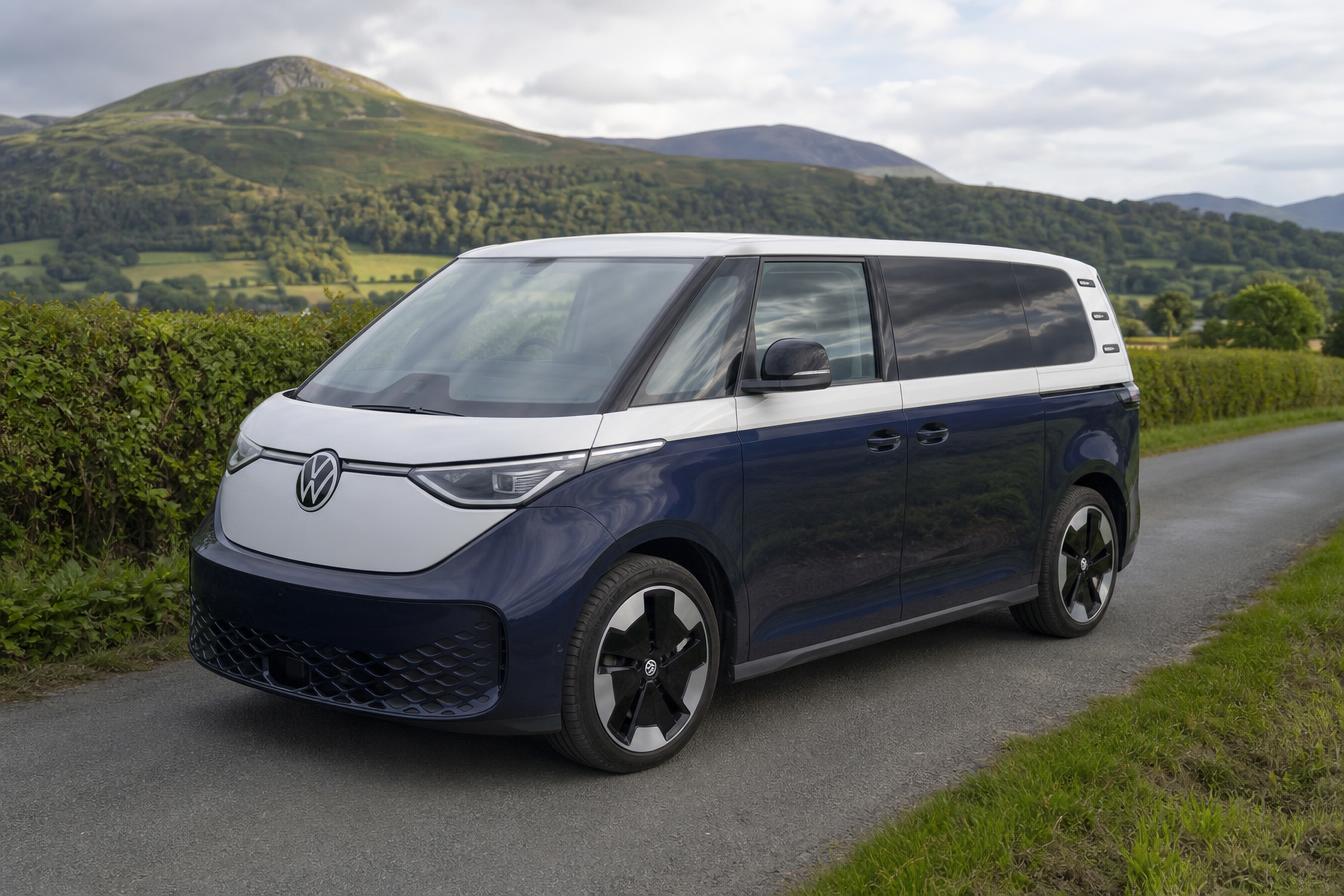
The VW ID. Buzz gives us a compact footprint and a practical load area. The rear holds the paint tins, rollers, brushes, fillers, masking materials and the compact ladders we use on most domestic jobs, while the short overhangs and tight turning circle make it easier to park in front of period cottages and on narrow village streets. The real-world range is more than enough for our standard Cumbria and Lancashire working radius, and regenerative braking helps recover energy on the long descents that characterise the area. It's a working van, not a statement, but it happens to be electric.
A quieter, cleaner arrival at every site
Diesel engines and exhaust fumes are intrusive in residential streets and conservation villages. An electric drivetrain removes that entirely: no particulates, no NOx and no lingering smell of diesel on a still morning. Clients notice the difference, particularly in places such as Milnthorpe, Grange-over-Sands and the smaller villages where homes are close to the road and the air doesn't move much. It's a small change that makes a big difference to how a site feels before we've even opened the back doors.
How we charge and plan routes around Cumbria and Lancashire
We charge the vans overnight at our base, taking advantage of lower-demand grid electricity and starting each day with a full battery. The scheduling team then batches jobs by geography — a Milnthorpe, Arnside and Grange-over-Sands day, or a Lancaster and Preston run — so we're not doubling back and wasting miles. Public rapid chargers are available as a backup, but careful route planning means we rarely need them. Telematics also lets us track energy use and identify where we can be even more efficient.
Carbon reduction isn't just about the van
The fleet is the biggest visible change, but the rest of our operation is being reviewed too. Where the substrate and finish allow, we use low-VOC and water-based paints. We order materials accurately, return unused stock to suppliers and recycle metal paint cans and timber offcuts. We use dust extraction to keep airborne waste down, and we invest in durable finishes because the most sustainable job is one that doesn't need redoing in five years. Battery-powered tools are increasingly replacing petrol equipment on site.
What this means for our clients
The service itself doesn't change. We still arrive on time, with the right materials, prepared to the same standard. What changes is the environmental footprint of getting us there. For homeowners who are trying to reduce their own impact, it's reassuring to know that the tradespeople in their home are making the same effort. There is no extra cost for the cleaner delivery — it's simply how we want to run the business.
The next steps
The first VW ID. Buzz vehicles are already on order, and the rollout will be phased so we can test range, load capacity and real-world energy use before replacing the entire fleet. We'll monitor mileage, charging patterns and driver feedback, and we're looking at a base-side solar and battery setup to make the charging even greener. The end goal is a fleet that covers Cumbria and Lancashire with zero tailpipe emissions and a site operation that wastes as little as possible.
Related service
See how we deliver interior painting & decorating across Cumbria and Lancashire.